Understanding the fundamental rules in pickleball is essential for players, court developers, sports facility owners, and equipment suppliers. One of the most important rules to learn is the non-volley zone (NVZ), commonly known as the “kitchen.” This designated area influences gameplay, court design, equipment selection, and the overall playing experience.
What Is the Pickleball Kitchen?
The pickleball kitchen is a 7-foot zone extending from the net on both sides of the court. According to the non-volley zone rule, players cannot hit the ball out of the air while standing in this area or touching its boundary lines.
Players must also avoid entering the kitchen as a result of their volleying motion, even if the ball has already been hit. However, they may enter the zone to play a ball that has bounced.
This rule encourages players to focus on precision, control, and strategic shot placement rather than relying solely on powerful smashes. Soft shots, particularly dinks, become essential techniques for maintaining an advantage near the net.
Whether playing recreationally or competitively, understanding the kitchen rule is crucial for players of all skill levels. It is also one of the defining features of pickleball, helping create a distinctive blend of strategy, accessibility, and fast-paced action.
Why Is the Non-Volley Zone Important?
The non-volley zone plays a significant role in shaping pickleball gameplay. By restricting volleys near the net, it encourages longer rallies and requires players to develop better timing, patience, and shot control.
Rather than depending entirely on strength, players must anticipate their opponents’ movements, position the ball strategically, and use controlled shots to create scoring opportunities.
This rule also contributes to pickleball’s broad appeal across different age groups and experience levels. It places greater emphasis on skill and strategy, allowing players with different physical abilities to compete more effectively.
For sports facility owners and court developers, understanding the kitchen rule is equally important. Proper court dimensions and markings help ensure compliance with official standards while providing a safe and enjoyable playing environment.
Pickleball Court Dimensions and Kitchen Layout
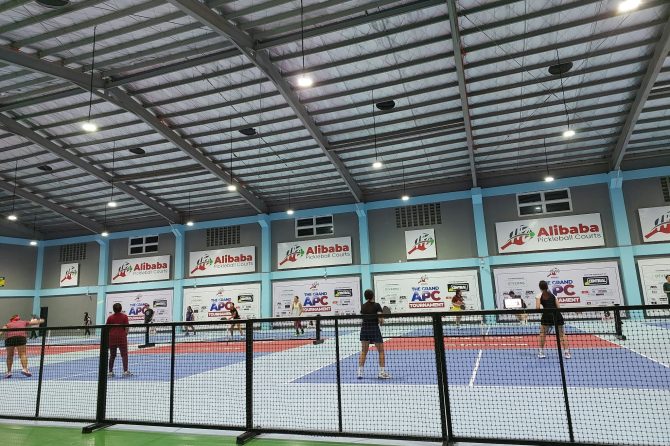
A standard pickleball court measures 20 feet wide by 44 feet long, including the playing area for both singles and doubles matches. Its compact dimensions make it possible to accommodate multiple pickleball courts within spaces traditionally used for tennis, creating additional opportunities for sports facilities to maximize court usage.
The non-volley zone extends 7 feet from the net on each side and must be clearly marked to distinguish it from the rest of the playing surface. Accurate measurements and visible boundary lines are essential for consistent gameplay and proper rule enforcement.
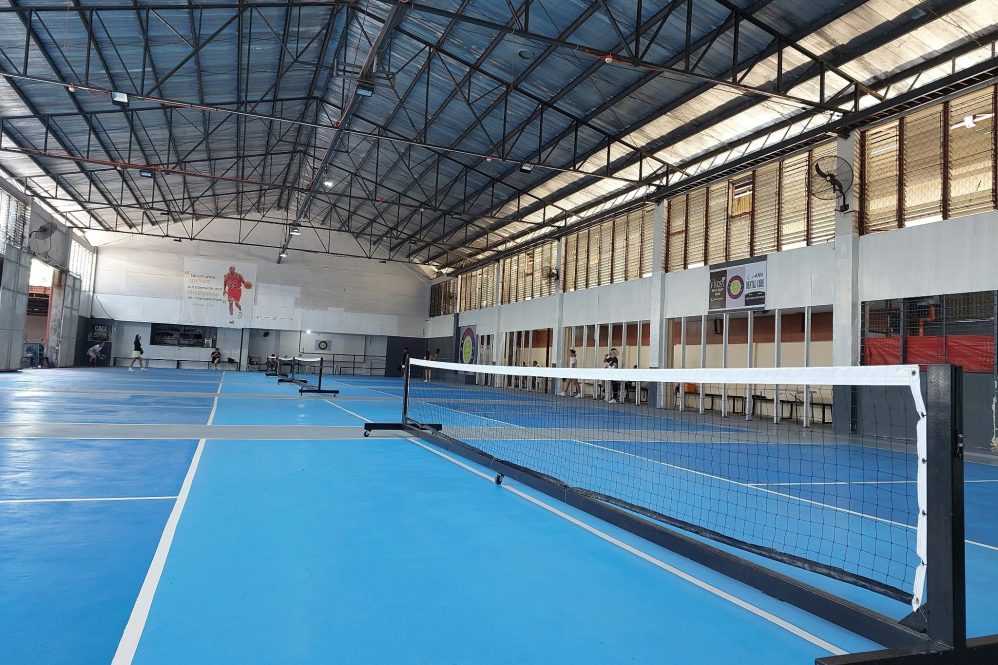
Court surface selection also plays an important role in performance and durability. Outdoor pickleball courts commonly use acrylic coatings designed to withstand changing weather conditions and frequent use. Indoor facilities may opt for specialized sports flooring that provides suitable traction, shock absorption, and sound management.
For developers and facility operators, combining accurate court markings with appropriate surface materials helps create a professional playing environment that meets players’ needs.
How the Kitchen Rule Influences Pickleball Equipment
Although the kitchen rule primarily governs player movement and ball contact, it also influences equipment preferences. Players who want to improve their performance near the net should consider equipment that supports accuracy, touch, and control.
Choosing the best pickleball paddle for beginners can make learning kitchen techniques easier. Beginner-friendly paddles often feature the following characteristics:
- Enhanced control: Helps players direct the ball accurately into specific areas of the court.
- A larger sweet spot: Provides more consistent contact, even when the ball does not strike the center of the paddle.
- Improved touch and feel: Makes it easier to execute soft shots and maintain control during dinking exchanges.
These features can help beginners develop confidence while learning the techniques needed to compete effectively near the net.
Pickleball Strategy: How to Gain an Advantage at the Kitchen
The kitchen is one of the most strategically important areas of a pickleball court. In recreational and competitive matches alike, controlling the non-volley zone can create opportunities to put opponents under pressure and win points.
Successful players focus on placement, consistency, and anticipation rather than relying exclusively on power. Key techniques include:
- Consistent dinking: Use soft, controlled shots that land in the opponent’s kitchen, making aggressive returns more difficult.
- Quick net reflexes: Stay alert and react efficiently to fast exchanges while maintaining proper positioning.
- Strategic shot placement: Direct the ball toward challenging locations to force opponents into defensive positions.
- Patience and positioning: Wait for the right opportunity to attack instead of attempting a risky winner too early.
Mastering these techniques allows players to make better decisions, maintain control of rallies, and take advantage of their opponents’ mistakes.
Mastering the Pickleball Kitchen Rule
The pickleball kitchen, officially known as the non-volley zone, is a fundamental element of the sport. It influences playing strategy, court construction, equipment selection, and the overall experience for players of all skill levels.
For players, understanding the rule helps improve technique, avoid faults, and develop a more strategic approach to the game. For court developers and sports facility owners, knowledge of the non-volley zone supports accurate court construction and a better playing environment.
Mastering the kitchen rule remains essential for anyone looking to improve their game or contribute to the sport’s continued growth.